I wrote this article for the UW Materials Science and Engineering Department.
Re-discovering an engineering passion through materials science

As he neared the end of his undergraduate work as a bioengineering major, Andrew Gonsalves found his enthusiasm for the field waning. Then he took a course outside his regular coursework, on the synthesis of materials, and it sparked an interest. “I got that passion back for school that I’d been missing,” he says. “I realized material science and engineering was what I wanted to pursue in graduate school.”
To get up to speed for the Applied Master’s Program, Andrew began coursework in the MSE department during the 2019 summer quarter. He also began working in Professor Dwayne Arola’s lab looking at fracture toughness — analyzing the defects within a material and how they influence the entire scope of how the material behaves. “I very much enjoy that [research],” he says.
Andrew would like to pursue a Ph.D. after his master’s, then work for some years in industry before pursuing a teaching career. He wants to impart a love for engineering in students. “I want to have that industry experience first, so I can figure out what I want to do. I feel like professors who find a passion and take off with it are the best ones to learn from.”
Advancing 3-D printing with thermoplastic composites
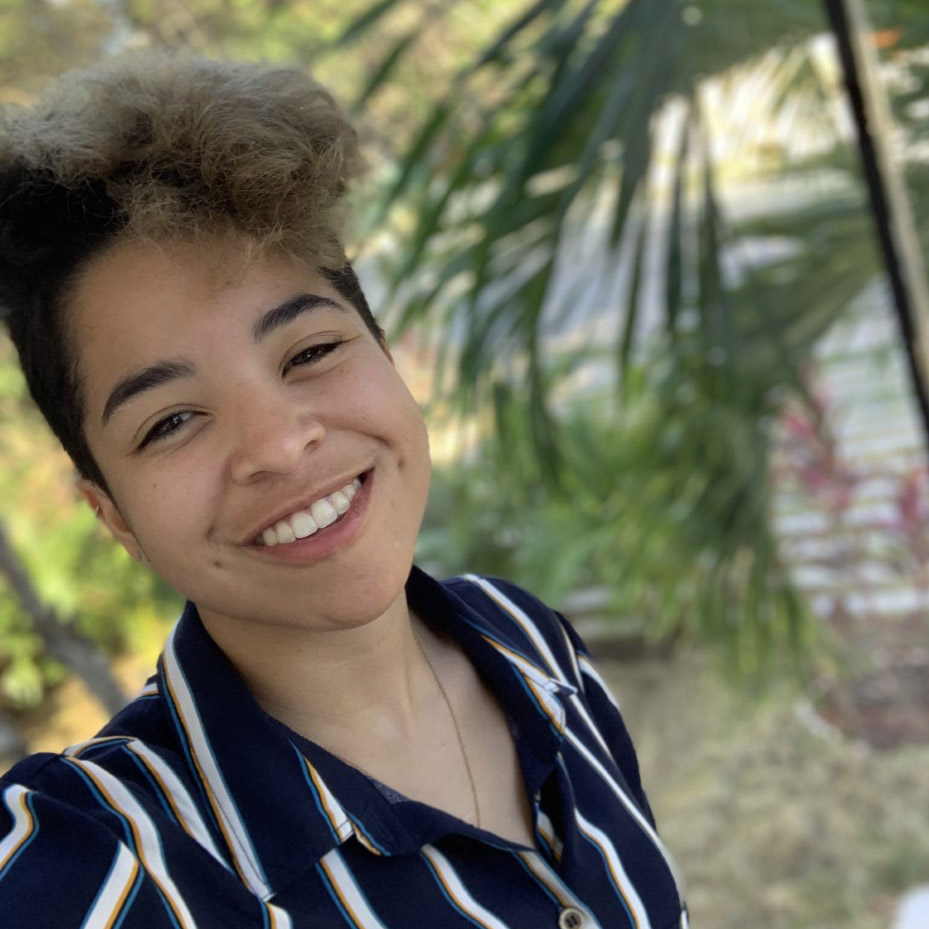
Mallory Parker has worked in 3-D printing for years. At Georgia Tech, where she majored in materials science and engineering , Mallory was employed at the 3-D printing facility assisting students. “I enjoyed working hands on, seeing how different temperatures affect the print quality, and optimizing that process,” she says.
In choosing a graduate school, Mallory was attracted both to UW’s reputation and the sense of community she felt when she visited. “Everyone is pushing everyone to succeed,” she says. “I wanted to be a part of that.”
Mallory began at the UW MSE department in the spring 2019 quarter, and is working in Professor Arola’s lab 3-D printing thermoplastic composites, a newer area of 3-D printing. “We’re partnering with the manufacturer Toray to work with an experimental material they recently developed,” Mallory says. “These types of materials could be used to print lighter-weight car and airplane parts.”
Mallory is interested in working in the aerospace industry after she completes her degree. In addition, having concentrated in biomaterials as an undergrad, she’s interested in going into the field of additive manufacturing for customized medical applications like dental or joint implants. But for now she’s exploring: “I’m open to any opportunity that comes my way.”
Pursuing safer, less expensive energy storage
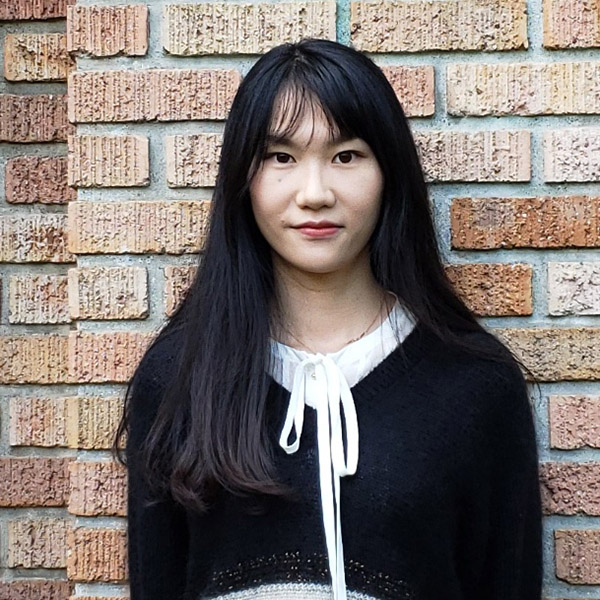
Xiaoxiao Jia’s path to the MSE Ph.D. program involved a detour. She hoped to be admitted directly into the doctoral program, but at first was offered only admission to AMP. She decided to pursue the master’s program in order to strengthen her Ph.D. application for the next time. That turned out to be a very successful plan.
In AMP, her research interests shifted from studying metals and alloys to solving problems in energy storage, thanks to a course she took from Professor Guozhong Cao. “It’s a relatively new but rapid-growing area,” she says. Her current research, an extension of her master’s work, focuses on aqueous zinc ion batteries. Zinc ion batteries offer a safer, more cost-effective alternative to lithium ion batteries. “It’s challenging and rewarding work,” she says.
Xiaoxiao appreciates the opportunity AMP gave her to be admitted into the doctoral program. “[The department] gave me a chance to prove I have the potential to do my Ph.D. by admitting me to AMP. I can now continue my work here.”
 Naghma Husain